Human anatomical models are indispensable visual teaching tools in medical education, clinical practice, and scientific research. By simulating the structure of the real human body, they help learners gain a deeper understanding of the morphology, location, and functional relationships of organs. These models present diverse types according to different classification criteria, each with its own characteristics in materials, design, and application scenarios, collectively supporting the needs of the entire process from basic teaching to advanced skills training.
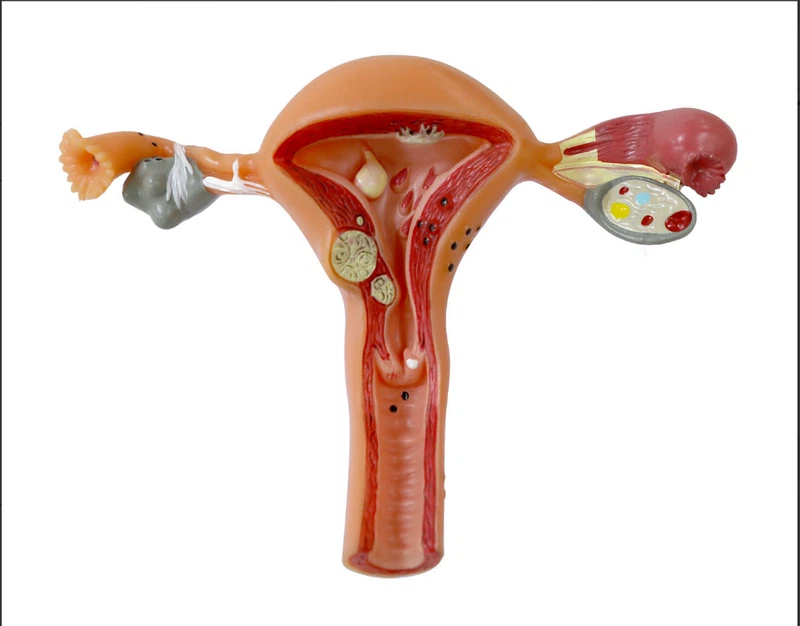
Based on the scope of display, models can be divided into whole-body anatomical models and regional anatomical models.
Whole body anatomical models show the complete human structure, such as the entire skeletal and muscular system or the combination of major organs. These models establish basic anatomical concepts from a holistic perspective, suitable for beginners to quickly grasp the macroscopic layout of the human body. Materials typically include high-strength plastics or resins to ensure durability and structural stability.
Regional anatomical models focus on specific areas, such as the head, heart, joints, or delicate organs (such as the eyeball or inner ear). Their design emphasizes detailed reproduction and is used for in-depth research and clinical practice. For example, joint models can simulate the movement mechanisms of the shoulder and hip, and the material may incorporate soft silicone to enhance tactile realism.
Anatomical models can be broken down into functional systems, such as the skeletal, muscular, nervous, and circulatory systems. Each system is integrated with correct spatial relationships, highlighting the synergistic effects between organs. For example, circulatory system models use color to distinguish arteries and veins, and are often made of PVC or soft silicone for easy observation of internal structures.
Layered anatomical models can be disassembled layer by layer, showing the hierarchical relationship from skin to deep structures. For example, an abdominal model sequentially presents abdominal wall muscles, abdominal organs, and retroperitoneal tissues. The design emphasizes spatial logic, and the material is often modular silicone, supporting repeated assembly.
Based on materials and manufacturing processes, anatomical models can be divided into traditional solid models, virtual simulation models, and high-fidelity soft silicone anatomical models.
Traditional solid models are made of plastic, silicone, or resin, manufactured through injection molding or 3D printing. Skeletal models show the details of bone connections, and muscle models display muscle texture. Material selection considers durability and cost-effectiveness, and they are widely used in basic teaching.
Virtual simulation models are built based on computer technology and support interactive operations such as rotation and layer dissection. For example, 3D digital anatomy software can simulate virtual dissection processes, with materials represented by a digital interface. Their advantages lie in unlimited scalability and an immersive learning experience.
High simulation soft silicone anatomy models are made of environmentally friendly silicone material, simulating the elasticity and color of real tissue, and can accurately reproduce blood vessels and nerve branches. The design emphasizes safety and durability, suitable for repeated touch training, and some integrate QR codes to link to digital resources to enhance interaction.

Pathological and functional demonstration models go beyond standard structures, showcasing diseased organs or physiological states, such as the liver in cirrhosis. These models are used for disease understanding and clinical reasoning, with materials emphasizing realistic tactile feedback, and some incorporating dynamic parts to simulate functional changes.
Based on teaching purposes, they can be divided into basic anatomical models, clinical skills training models, and pathological anatomy models.
Basic anatomical models, such as models of the nine major systems (motor, digestive, respiratory, etc.), are used to learn normal structures. The materials are simple and intuitive, highlighting organ morphology and positional relationships, making them introductory teaching tools for medical schools.
Clinical skills training models simulate surgical procedures, such as intravenous puncture or cardiopulmonary resuscitation simulators. The design emphasizes functionality and safety, and the materials may incorporate sensor feedback to improve practical skills.
Pathological anatomy models display diseased organs (such as tumor tissue), helping to understand the impact of disease on structure. Materials are carefully chosen to reproduce pathological features, such as color variations or texture differences, for use in advanced teaching and case analysis.
Core features of anatomical models include material diversity, functional design, and wide applicability. From plastic to silicone, different materials balance cost, durability, and realism to suit various teaching scenarios. Models are detachable, feature dynamic parts, or are digitally integrated, enhancing interactivity and learning depth. Anatomical models cover the entire process from basic knowledge to clinical skills, supporting the multi-stage needs of medical education.

The continuous evolution of human anatomical models, integrating traditional craftsmanship with modern technology, is reshaping the intuitiveness and efficiency of medical teaching, providing a solid tool for cultivating professionals.

 Language


