

The skeletal system of a dog is a complex and fascinating structure that provides support, protection, and mobility. Understanding the normal angles of the joints in a dog skeleton is crucial for veterinarians, breeders, and dog enthusiasts alike. As a leading dog skeleton supplier, we have extensive knowledge and experience in this area. In this blog post, we will explore the normal angles of the joints in a dog skeleton and their significance.

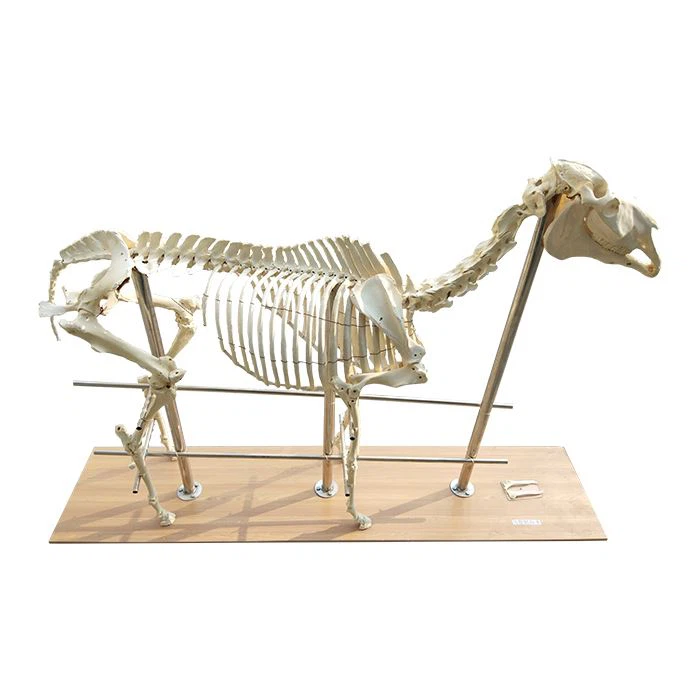
The Shoulder Joint
The shoulder joint in a dog is a ball - and - socket joint that allows for a wide range of motion. The normal angle of the shoulder joint at rest is approximately 110 - 120 degrees. This angle can vary slightly depending on the breed and size of the dog. For example, larger breeds may have a slightly wider shoulder angle to accommodate their greater body mass.
The shoulder joint's angle is important for proper locomotion. A well - aligned shoulder joint enables the dog to take long, efficient strides. If the shoulder angle is too narrow, it can lead to restricted movement and increased stress on the joint, potentially causing lameness or arthritis over time. On the other hand, an excessively wide shoulder angle may result in a less stable gait.
The Elbow Joint
The elbow joint is a hinge joint that consists of the humerus, radius, and ulna. The normal angle of the elbow joint in a standing dog is around 130 - 140 degrees. This angle allows for smooth flexion and extension of the forelimb.
Deviations from the normal elbow joint angle can be associated with various orthopedic problems. For instance, an abnormal elbow angle may contribute to elbow dysplasia, a common condition in many dog breeds. Elbow dysplasia can cause pain, lameness, and degenerative joint disease. Breeders often pay close attention to the elbow joint angles when selecting breeding stock to reduce the incidence of this condition.
The Hip Joint
The hip joint is another ball - and - socket joint that plays a vital role in a dog's movement. The normal angle of the hip joint in a standing position is about 100 - 110 degrees. This angle is critical for the proper transfer of weight from the body to the hindlimbs during locomotion.
Hip dysplasia is a significant concern in dogs, especially in large and giant breeds. An abnormal hip joint angle can increase the risk of hip dysplasia. In dogs with hip dysplasia, the ball and socket of the hip joint do not fit together properly, leading to joint instability, wear and tear, and eventually arthritis. Early detection of abnormal hip joint angles through radiography can help in managing and treating this condition.
The Knee Joint (Stifle Joint)
The stifle joint is equivalent to the human knee and is a complex joint with multiple ligaments and structures. The normal angle of the stifle joint at rest is approximately 120 - 130 degrees. This angle allows for efficient movement of the hindlimb, including flexion and extension.
Cruciate ligament injuries are common in dogs, and the angle of the stifle joint can influence the risk of such injuries. An abnormal stifle joint angle may place additional stress on the cruciate ligaments, making them more prone to rupture. Proper management of the stifle joint angle is important for preventing and treating these ligament injuries.
The Hock Joint
The hock joint is similar to the human ankle joint. The normal angle of the hock joint in a standing dog is around 140 - 150 degrees. This angle provides stability and propulsion during movement.
Abnormal hock joint angles can affect a dog's gait and performance. For example, a hock joint with a reduced angle may result in a choppy or inefficient gait, while an overly extended hock joint may lead to instability.
Significance of Normal Joint Angles for Breed Standards
In the world of dog breeding, normal joint angles are often an important part of breed standards. Breed standards define the ideal physical characteristics of a particular breed, including the angles of the joints. Breeders aim to produce dogs that conform to these standards to maintain the breed's integrity and functionality.
For example, in breeds that are used for hunting or herding, proper joint angles are essential for their working ability. A dog with well - aligned joints is more likely to have the endurance and agility required for these tasks.
Our Role as a Dog Skeleton Supplier
As a dog skeleton supplier, we understand the importance of providing high - quality specimens that accurately represent the normal joint angles in dogs. Our dog skeletons are sourced from reliable and ethical channels, and they are carefully prepared to preserve the natural joint angles.
We offer a wide range of dog skeletons, suitable for educational purposes in veterinary schools, research institutions, and for collectors. Our specimens can be used to study the normal anatomy of the dog skeleton, including the joint angles, and to compare them with abnormal cases.
In addition to dog skeletons, we also provide other animal skeletons. If you are interested in Cow Bones, Horse Skeleton, or Animal Skeleton, we have a diverse collection to meet your needs.
Contact Us for Procurement
If you are looking for high - quality dog skeletons or other animal skeletons, we invite you to contact us for procurement. Whether you are a veterinary school, a research facility, or an individual collector, we can provide you with the specimens you need. Our team of experts is ready to assist you in selecting the right specimens and answering any questions you may have. Start your journey of exploring the amazing world of animal skeletons with us!
References
- Evans, H. E., & de Lahunta, A. (2013). Miller's Anatomy of the Dog. Elsevier Health Sciences.
- Dyce, K. M., Sack, W. O., & Wensing, C. J. G. (2010). Textbook of Veterinary Anatomy. Saunders.
- Olby, N. J., & Levine, J. M. (2017). Canine and Feline Sports Medicine and Rehabilitation. Elsevier.


