

Microscope slides are essential tools in various scientific fields, from biology to materials science. As a supplier of high - quality microscope slides, I've witnessed firsthand the common mistakes that users make when working with these delicate items. In this blog, I'll delve into some of these errors and provide insights on how to avoid them.
1. Incorrect Slide Selection
One of the most prevalent mistakes is choosing the wrong type of microscope slide for the task at hand. There are different types of microscope slides available, each designed for specific applications. For instance, Prepared Microscope Slides come pre - mounted with specimens, which are ideal for educational purposes or quick reference. These slides save time as they don't require the user to prepare the specimen themselves.
On the other hand, Biological Microscope Slides are specifically designed for biological specimens. They are usually made of high - quality glass that is chemically inert and won't react with biological samples. Using the wrong slide can lead to inaccurate results or damage to the specimen. For example, if you use a slide that is not properly cleaned or has impurities, it can interfere with the observation of the specimen under the microscope.
2. Improper Slide Cleaning
Cleaning microscope slides is a crucial step that is often overlooked. Dirty slides can have a significant impact on the quality of the observation. Dust, fingerprints, and other contaminants can obscure the view of the specimen and make it difficult to identify important features.
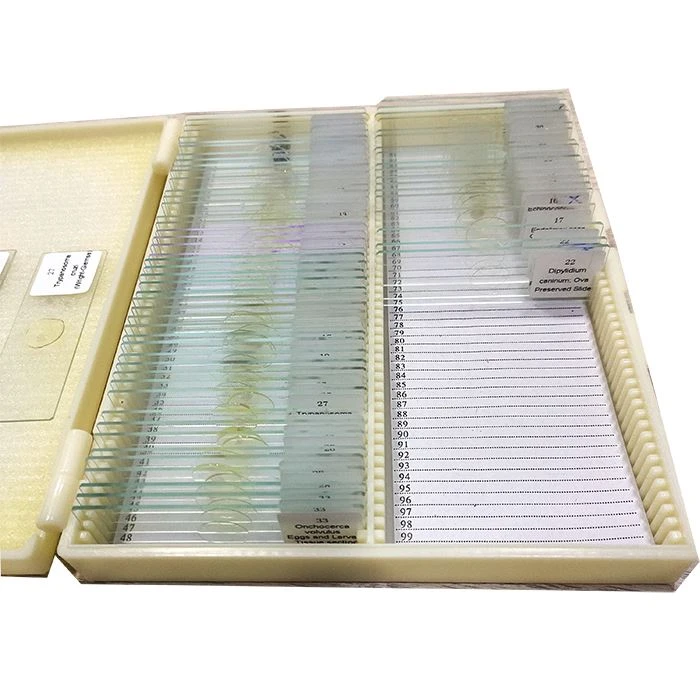

To clean microscope slides properly, start by using a lint - free cloth or a special slide - cleaning tissue. Gently wipe the slide to remove any visible debris. For more stubborn stains, you can use a mild cleaning solution, such as a mixture of water and a small amount of dish soap. After cleaning, rinse the slide thoroughly with distilled water to remove any residue from the cleaning solution. Make sure to dry the slide completely before using it to prevent water spots from forming.
3. Inadequate Specimen Preparation
The way you prepare the specimen on the slide can greatly affect the quality of the observation. One common mistake is using too much or too little of the specimen. If you use too much, the specimen may be too thick, and it will be difficult to focus on different layers. On the other hand, if you use too little, you may not have enough material to observe.
Another issue is improper spreading or mounting of the specimen. For liquid specimens, such as blood or cell cultures, it's important to spread the sample evenly on the slide. You can use a coverslip to gently press the specimen and ensure an even distribution. When mounting specimens with a coverslip, make sure to place it at an angle to avoid trapping air bubbles. Air bubbles can distort the view of the specimen and make it difficult to interpret the results.
4. Incorrect Coverslip Placement
The coverslip plays a vital role in protecting the specimen and providing a flat surface for observation. However, many users make mistakes when placing the coverslip. One common error is placing the coverslip too quickly, which can cause air bubbles to form. To avoid this, place one edge of the coverslip on the slide at an angle, and then slowly lower it onto the specimen. This allows the air to escape gradually and reduces the chances of air bubble formation.
Another issue is using a coverslip that is too thick or too thin. The thickness of the coverslip can affect the focus and resolution of the microscope. Most microscopes are designed to work optimally with a specific coverslip thickness. Make sure to choose a coverslip with the appropriate thickness for your microscope.
5. Mishandling of Slides
Microscope slides are delicate and can be easily damaged if not handled properly. One of the most common forms of mishandling is dropping the slides. Even a small drop can cause the slide to crack or break, rendering it useless. When handling slides, always hold them by the edges to avoid getting fingerprints on the viewing area.
Storing slides incorrectly can also lead to damage. Slides should be stored in a clean, dry, and dust - free environment. They should be kept in slide boxes or storage containers to protect them from physical damage. Avoid stacking slides on top of each other without proper padding, as this can cause scratches or breakage.
6. Lack of Focus Adjustment
Proper focus adjustment is essential for clear observation of the specimen. Many users struggle with finding the correct focus, especially when using high - power objectives. One common mistake is over - or under - focusing. Over - focusing can cause the image to become blurry, while under - focusing may not provide enough detail.
To adjust the focus correctly, start with the lowest - power objective. Use the coarse focus knob to bring the specimen into approximate focus, and then use the fine focus knob to fine - tune the focus. As you switch to higher - power objectives, the depth of field decreases, so you may need to make more precise focus adjustments.
7. Ignoring Slide Compatibility with the Microscope
Not all microscope slides are compatible with all types of microscopes. Some microscopes may have specific requirements for slide size, thickness, or material. For example, some advanced microscopes are designed to work with specialized slides that have certain optical properties.
Before using a slide with a microscope, make sure to check the compatibility. Refer to the microscope's user manual or consult with the manufacturer if you're unsure. Using an incompatible slide can lead to poor image quality, reduced resolution, or even damage to the microscope.
8. Failure to Follow Safety Precautions
When working with microscope slides, it's important to follow safety precautions, especially when dealing with biological or chemical specimens. Some specimens may be hazardous, such as those containing pathogens or toxic chemicals.
Always wear appropriate personal protective equipment, such as gloves and goggles, when handling potentially dangerous specimens. Make sure to dispose of used slides and specimens properly according to local regulations. Improper disposal can pose a risk to the environment and human health.
In conclusion, using microscope slides correctly is crucial for obtaining accurate and clear observations. By avoiding these common mistakes, you can improve the quality of your work and get the most out of your microscope. As a trusted supplier of microscope slides, we are committed to providing high - quality products and helping our customers use them effectively. If you're in the market for microscope slides or have any questions about their use, we encourage you to contact us for a procurement discussion. We look forward to serving your scientific needs.
References
- "Microscopy: A Practical Approach" by David B. Murphy
- "Biological Microscopy: Techniques and Applications" by J. Brian Jennings


