

Hey there, fellow horse enthusiasts! As a supplier of high - quality Horse Skeleton, I've spent a ton of time diving deep into the fascinating world of horse anatomy. One question that often pops up is how the horse skeleton adapts to different riding disciplines. Let's take a closer look at this amazing topic.
The Basics of the Horse Skeleton
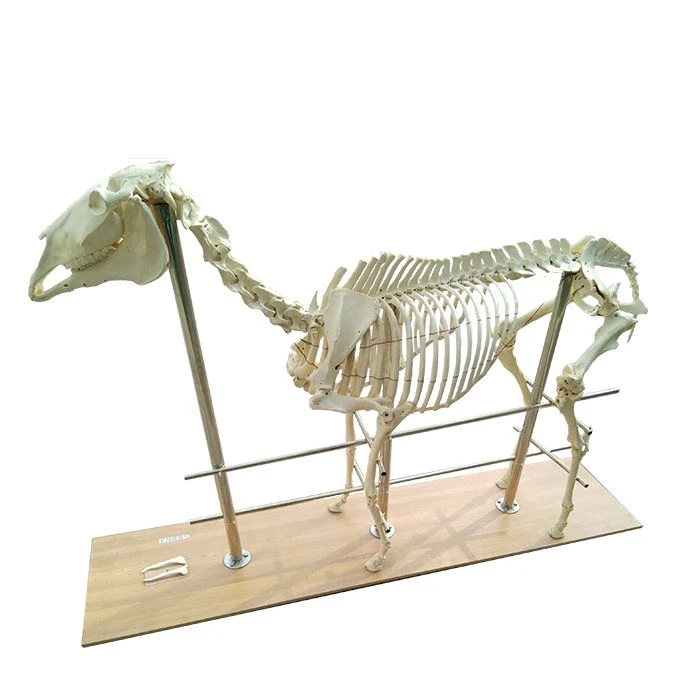
Before we get into the adaptations for different riding disciplines, let's quickly go over the basics of the horse skeleton. A horse's skeleton is made up of around 205 bones. It provides support for the body, protects vital organs, and serves as an attachment point for muscles. The main parts of the horse skeleton include the skull, spine, ribs, pelvis, and limbs.
The skull protects the brain and houses the sensory organs like the eyes, ears, and nose. The spine, or vertebral column, is a series of bones that runs from the skull to the tail. It gives the horse flexibility and support. The ribs form a cage around the chest, protecting the heart and lungs. The pelvis is important for hind - limb movement and provides a connection between the hind legs and the rest of the body. And of course, the limbs are what allow the horse to move around, whether it's walking, trotting, cantering, or galloping.
Adaptations for Dressage
Dressage is all about precision, elegance, and harmony between the horse and rider. In dressage, horses need to perform a series of complex movements with grace and control. So, how does the horse skeleton adapt to this discipline?
First off, the neck plays a crucial role. A horse with a well - formed neck has better balance and flexibility. In dressage, the horse is often required to collect its body, which means bringing its hindquarters under its body and raising its forehand. A long, arched neck allows the horse to shift its weight more easily and maintain a correct posture. The cervical vertebrae in the neck are designed to give the horse a wide range of motion, enabling it to bend and flex in different directions.
The hindquarters are also extremely important in dressage. A strong, well - muscled pelvis and hind limbs are necessary for the horse to push off the ground and perform powerful movements. The femur, tibia, and fibula in the hind legs need to be well - proportioned and strong to support the horse's weight and generate the force needed for movements like the piaffe and passage.
Adaptations for Jumping
Jumping is a thrilling discipline that requires a horse to have both power and agility. When a horse jumps, it has to quickly lift its body off the ground, clear an obstacle, and then land safely.
The forelimbs are key in jumping. The horse needs to have strong shoulders and elbows to absorb the impact of landing. The radius and ulna in the forelegs provide support and stability during the take - off and landing phases. A horse with well - developed shoulder muscles can lift its forehand more effectively, allowing it to clear higher jumps.
The spine also plays an important role in jumping. The horse's back needs to be flexible enough to arch as it takes off and then straighten out during the flight phase. The lumbar vertebrae in the lower back are particularly important for this movement. A flexible spine helps the horse adjust its body position in the air and land smoothly.
In addition, the hindquarters are crucial for generating the power needed to jump. The horse uses its hind legs to push off the ground and propel itself forward and upward. A strong pelvis and well - developed hind - limb muscles are essential for high - performance jumping.

Adaptations for Western Riding
Western riding is known for its relaxed style and long hours in the saddle. It often involves activities like cattle herding and trail riding.
The horse's overall build is important in western riding. A horse with a broader chest and a shorter back is more suitable for this discipline. The broader chest provides more room for the heart and lungs, allowing the horse to have better endurance during long rides. The shorter back gives the horse more stability and makes it easier for the rider to stay balanced.
The limbs in western riding horses also have some unique adaptations. The legs need to be strong and sturdy to support the horse's weight over long distances. The fetlocks, which are the joints between the cannon bone and the pastern bone, need to be well - developed to absorb the shock of walking on uneven terrain.
Adaptations for Endurance Riding
Endurance riding is all about covering long distances at a steady pace. Horses in this discipline need to have excellent stamina and be able to handle the physical demands of a long ride.
The horse's skeletal system needs to be well - adapted for endurance. The bones need to be strong enough to withstand the repetitive stress of long - distance travel. The joints, such as the knees and hocks, need to be healthy and flexible to prevent injuries.
The horse's overall body structure is also important. A horse with a leaner build and longer legs is often more efficient in endurance riding. Longer legs allow the horse to take larger strides, covering more ground with each step. The spine needs to be relatively straight and strong to provide support during the long ride.
Our Horse Skeleton Offerings
As a supplier of Horse Skeleton, we understand the importance of a well - preserved and accurate horse skeleton for educational and research purposes. Our horse skeletons are carefully prepared to show all the details of the skeletal structure, which can be extremely helpful for those who want to study how the horse skeleton adapts to different riding disciplines.
In addition to horse skeletons, we also offer Dog Skeleton and Anatomical Dog Skeleton for those interested in canine anatomy.
If you're a researcher, educator, or just someone with a passion for animal anatomy, our skeletons are a great resource. They can help you better understand the unique adaptations of different animals and how their skeletal structures contribute to their physical abilities.
Contact Us for Purchasing
If you're interested in purchasing any of our skeletons, whether it's a horse skeleton, dog skeleton, or anatomical dog skeleton, don't hesitate to reach out. We're here to answer any questions you might have and guide you through the purchasing process. We offer high - quality products at competitive prices, and we're committed to providing excellent customer service.
References
- "Equine Anatomy" by Robert A. Kainer
- "The Horse's Skeleton: Structure and Function" by Jane Smith
- "Riding Disciplines and Equine Adaptations" in the Journal of Equine Science


