

Hey there! As a supplier in the plastination business, I often get asked about how plastination works on soft - tissue specimens. It's a super interesting process, and I'm stoked to share all the details with you.
So, let's start from the basics. Plastination is a technique that was developed to preserve biological specimens in a lifelike state. It's a game - changer for the fields of education, research, and even art. Instead of using traditional preservation methods like formaldehyde, which can be harmful and doesn't always give the best long - term results, plastination offers a cleaner and more durable alternative.
The Initial Steps: Fixation and Dehydration
The first step in plastinating a soft - tissue specimen is fixation. This is like setting the specimen in its current state. We use a fixative, usually a solution of formaldehyde, to stop any decomposition processes and harden the tissues slightly. It's a crucial step because it stabilizes the specimen so that we can work on it further.
After fixation, the next big step is dehydration. Water is the enemy when it comes to long - term preservation. Water can cause mold growth, rot, and other issues over time. So, we immerse the specimen in a series of baths of increasing alcohol concentration. The alcohol gradually replaces the water in the tissues. This process can take a while, depending on the size and complexity of the specimen. For a small soft - tissue sample, it might take a few days, but for a larger specimen like a whole animal, it could take weeks.
Forced Impregnation: The Heart of Plastination
Once the specimen is completely dehydrated, it's time for the most important part of the process: forced impregnation. In this step, we place the specimen in a chamber filled with a liquid polymer, such as silicone rubber or epoxy resin. But here's the catch: we create a vacuum inside the chamber. The vacuum reduces the pressure, which causes the alcohol in the specimen to boil off at a lower temperature. As the alcohol evaporates, the polymer seeps into the spaces left behind by the alcohol.
This is a slow and delicate process. We have to carefully control the temperature, pressure, and the duration of the impregnation. If the vacuum is too strong or the temperature is too high, it can damage the specimen. On the other hand, if the process is too slow, the polymer might not fully penetrate the tissues. It's all about finding that sweet spot.

Curing: Making the Specimen Permanent
After the forced impregnation is complete, the specimen is now filled with the polymer. But it's still in a liquid state. To make the specimen solid and permanent, we need to cure it. Curing is basically a chemical reaction that turns the liquid polymer into a solid.
The curing process depends on the type of polymer used. For silicone rubber, we usually use a catalyst and heat to speed up the reaction. For epoxy resin, it might require a different set of chemicals and conditions. Once the curing is done, the specimen is transformed from a soft, perishable object into a hard, durable one that can last for decades.
Applications and Examples
Now that you know how plastination works, let's talk about some of the cool things we can do with plastinated soft - tissue specimens. In the field of education, plastinated specimens are amazing teaching tools. For example, you can check out our Anatomy Of Head Plastination specimens. These are great for medical students to study the complex anatomy of the head in a hands - on way.
In the art world, plastination has also opened up new possibilities. Artists can use plastinated specimens to create unique and thought - provoking sculptures. And for research purposes, plastinated specimens can be used to study the structure and function of different tissues without the need for constant refrigeration or the use of harmful chemicals.
We also have Plastinated Cats in our collection. These are not only educational but also really interesting to look at. They give a detailed view of the internal anatomy of cats, which can be useful for veterinarians, zoologists, and anyone interested in feline biology.
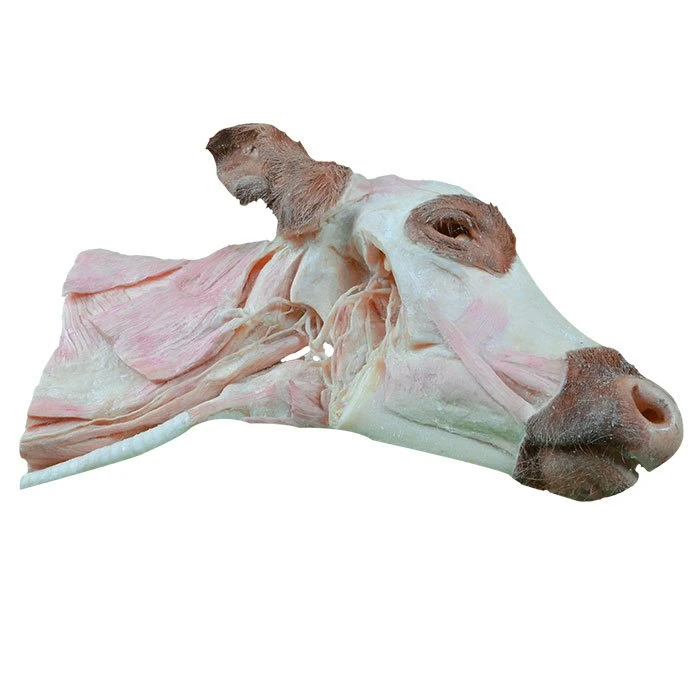
Another example is our Cost Of Plastination Cow Head And Neck specimens. These are great for agricultural and veterinary education, showing the complex structures in the head and neck region of cows.
Why Choose Our Plastination Services
As a supplier, we take pride in our plastination services. We have a team of experienced technicians who are experts in every step of the process. We use high - quality polymers and the latest equipment to ensure the best results. Our specimens are not only well - preserved but also look incredibly lifelike.
We understand that every customer has different needs. Whether you're a school looking for educational specimens, a researcher in need of a specific sample, or an artist with a unique vision, we can work with you to create the perfect plastinated specimen.
Let's Talk Business
If you're interested in purchasing plastinated soft - tissue specimens or want to learn more about our services, don't hesitate to reach out. We're always happy to have a chat, answer your questions, and discuss your specific requirements. Whether you need a single specimen or a large order for an institution, we're here to help.
References
- "Plastination: A New Technique for the Preservation of Biological Specimens" by Gunther von Hagens.
- "The Art and Science of Plastination" by various authors in the Journal of Biological Preservation.


