

Hey there! As a supplier of Brain Models, I've had the privilege of seeing firsthand how these models contribute to the field of cognitive psychology. In this blog, I'll share some insights on how brain models play a crucial role in advancing our understanding of the human mind.
Visualizing the Complexity of the Brain
Let's face it, the brain is an incredibly complex organ. It's like a super - computer with billions of neurons firing away, controlling everything from our thoughts to our movements. Cognitive psychology is all about understanding how the brain processes information, makes decisions, and forms memories. But it's hard to wrap your head around all these processes without a visual aid.
That's where our brain models come in. Take our Educational Human Body Model, for example. This model provides a comprehensive view of the human body, with a detailed focus on the nervous system. It allows students and researchers to see how the brain is connected to the rest of the body, which is essential for understanding how cognitive processes are influenced by physical factors.
The Human Brain Model For Teaching is another great tool. It's specifically designed to help educators explain complex brain structures and functions to their students. With this model, you can point out different regions of the brain, like the cerebrum, cerebellum, and brainstem, and show how they work together. It's much easier for students to understand concepts like memory formation or decision - making when they can see the physical structures involved.
Facilitating Research and Experimentation
Brain models aren't just useful for teaching; they're also valuable in research. Cognitive psychologists often conduct experiments to test theories about how the brain works. Our models can be used as a reference point during these experiments.

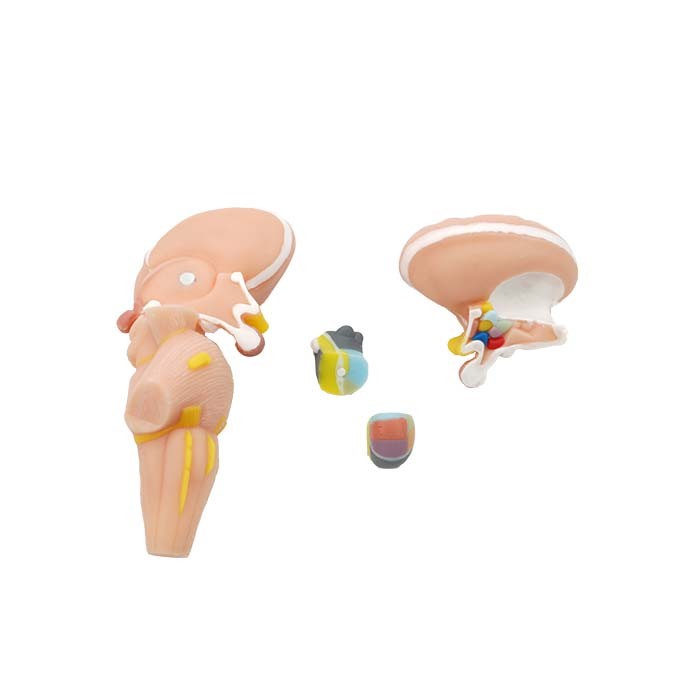
For instance, if a researcher is studying the role of the brainstem in regulating basic life functions, they can use our Brainstem Model to get a clear understanding of its structure. This can help them design more accurate experiments and interpret their results better.
Moreover, brain models can be used to simulate different brain conditions. Researchers can use them to study how the brain responds to injuries or diseases, which can provide valuable insights into cognitive disorders. By manipulating the model to mimic certain conditions, they can observe how different parts of the brain are affected and how this impacts cognitive processes.
Bridging the Gap Between Theory and Practice
In cognitive psychology, there's often a big gap between theoretical knowledge and practical application. Brain models help bridge this gap. They allow students and researchers to take the abstract concepts they learn in textbooks and turn them into something tangible.
When students are learning about the brain's neural networks, for example, it can be difficult to imagine how billions of neurons are interconnected. But with a brain model, they can see the physical layout of these networks and understand how information flows through them. This hands - on experience can enhance their learning and make the concepts more memorable.
For professionals in the field, brain models can also be used to communicate their research findings to others. Whether it's presenting at a conference or collaborating with other researchers, a visual model can make it easier to convey complex ideas.
Inspiring the Next Generation of Cognitive Psychologists
One of the most important contributions of brain models is their ability to inspire the next generation of cognitive psychologists. When students see a detailed brain model for the first time, it can spark their curiosity and interest in the field.
Our models are designed to be engaging and interactive. They're made from high - quality materials that look and feel realistic, which makes the learning experience more enjoyable. Students can touch and manipulate the models, which helps them develop a deeper understanding of the brain.
By providing students with access to these models, we're helping to create a new generation of researchers who are passionate about cognitive psychology. This, in turn, will lead to more breakthroughs in the field and a better understanding of the human mind.
Conclusion
In conclusion, brain models are an invaluable tool in the field of cognitive psychology. They help us visualize the complexity of the brain, facilitate research and experimentation, bridge the gap between theory and practice, and inspire the next generation of researchers.
If you're involved in cognitive psychology, whether you're a student, educator, or researcher, our brain models can provide you with a unique and valuable learning experience. We're always looking for new partners and customers, and we'd love to discuss how our models can meet your specific needs. So, if you're interested in purchasing our brain models or have any questions, don't hesitate to reach out. Let's work together to advance our understanding of the human mind!
References
- Goldstein, E. B. (2019). Cognitive Psychology: Connecting Mind, Research, and Everyday Experience. Cengage Learning.
- Gazzaniga, M. S., Ivry, R. B., & Mangun, G. R. (2018). Cognitive Neuroscience: The Biology of the Mind. W. W. Norton & Company.


