

As a dedicated supplier of microscope slides, I often encounter a wide range of inquiries from customers across various fields. One question that has piqued my interest recently is whether microscope slides can be used for ceramics. This topic combines the worlds of microscopy and ceramics, two areas that might not seem immediately related but share some fascinating intersections. In this blog post, we'll delve into the science behind microscope slides, the unique properties of ceramics, and explore the potential uses and limitations of using microscope slides in the context of ceramics.
Understanding Microscope Slides
Microscope slides are thin, flat pieces of glass or plastic that are used to hold specimens for examination under a microscope. They come in various sizes and thicknesses, but the most common dimensions are 75 x 25 mm with a thickness of around 1 mm. These slides are designed to be transparent, allowing light to pass through the specimen and into the microscope's objective lens, enabling clear visualization of the sample's structure.
There are two main types of microscope slides: prepared and biological. Prepared Microscope Slides come pre-mounted with a specimen, which has been carefully prepared and stained to highlight specific features. These are often used in educational settings or for quick reference. On the other hand, Biological Microscope Slides are typically used for fresh or wet specimens, such as cells or tissues, and require the user to prepare the sample themselves.
The material used to make microscope slides is crucial for their performance. Glass slides are the most common choice due to their high optical clarity, chemical resistance, and durability. They can withstand high temperatures and are compatible with a wide range of staining techniques. Plastic slides, on the other hand, are more flexible and lightweight, making them suitable for certain applications where glass might be too brittle or heavy.

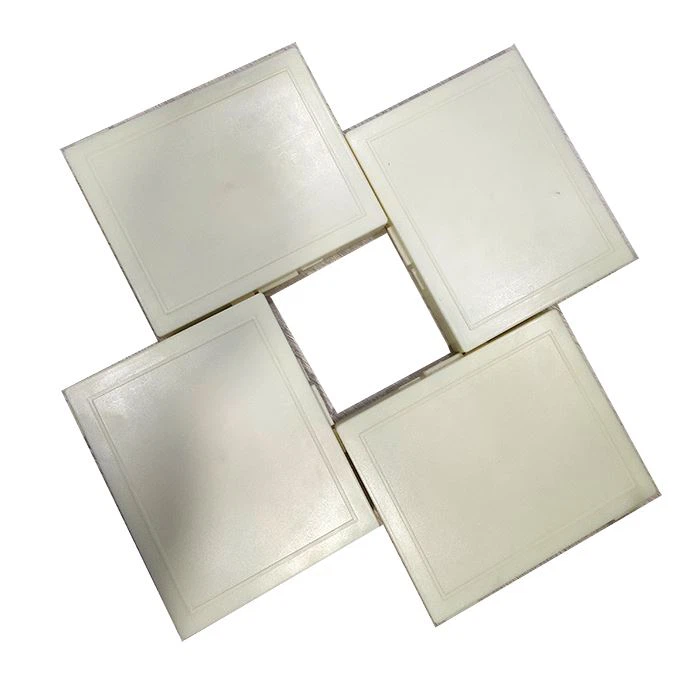
The World of Ceramics
Ceramics are a diverse group of materials that have been used by humans for thousands of years. They are made from inorganic, non-metallic compounds, typically clay, and are formed by heating the raw materials to high temperatures. This process, known as firing, causes the clay to harden and develop its characteristic properties, such as hardness, brittleness, and resistance to heat and chemicals.
Ceramics come in many different forms, including pottery, porcelain, tiles, and advanced ceramics used in high-tech applications. Each type of ceramic has its own unique composition and properties, which are determined by the raw materials used, the firing temperature, and the manufacturing process. For example, pottery is usually made from low-fired clay and has a porous structure, while porcelain is made from high-fired clay and is more dense and translucent.
The study of ceramics is important for understanding their properties, performance, and potential applications. Microscopy plays a crucial role in this field, as it allows researchers to examine the microstructure of ceramics at a microscopic level. By analyzing the grain size, crystal structure, and distribution of phases in a ceramic sample, scientists can gain insights into its mechanical, electrical, and thermal properties.
Potential Uses of Microscope Slides in Ceramics
Microstructural Analysis
One of the most common uses of microscope slides in ceramics is for microstructural analysis. By preparing thin sections of a ceramic sample and mounting them on a microscope slide, researchers can observe the internal structure of the material using a microscope. This can help them identify the different phases present in the ceramic, such as grains, pores, and second phases, and analyze their size, shape, and distribution.
To prepare a thin section of a ceramic sample, the sample is first cut into a small piece using a diamond saw. The piece is then mounted on a glass slide using a suitable adhesive, such as epoxy resin. The mounted sample is then ground and polished to a thickness of a few micrometers, using a series of abrasive papers and polishing compounds. Finally, the polished sample is examined under a microscope using transmitted or reflected light, depending on the type of ceramic and the information required.
Phase Identification
Microscope slides can also be used for phase identification in ceramics. Different phases in a ceramic sample have different crystal structures and chemical compositions, which can be identified using techniques such as X-ray diffraction (XRD) and energy-dispersive X-ray spectroscopy (EDS). By preparing a thin section of the ceramic sample on a microscope slide and analyzing it using these techniques, researchers can determine the phases present in the sample and their relative proportions.
For example, if a ceramic sample contains a mixture of different phases, such as a ceramic matrix composite, the thin section can be analyzed using EDS to determine the chemical composition of each phase. The results can then be compared with known standards to identify the phases present in the sample. This information can be used to optimize the processing conditions and improve the performance of the ceramic material.
Quality Control
Microscope slides can also be used for quality control in the ceramics industry. By examining the microstructure of ceramic products, manufacturers can ensure that they meet the required specifications and standards. For example, in the production of ceramic tiles, the microstructure of the tiles can be examined using a microscope to check for defects such as cracks, pores, and inclusions. If any defects are found, the tiles can be rejected or reprocessed to improve their quality.
In addition, microscope slides can be used to monitor the changes in the microstructure of ceramic materials during processing. For example, during the firing process, the microstructure of the ceramic can change due to factors such as sintering, grain growth, and phase transformations. By examining thin sections of the ceramic at different stages of the firing process, manufacturers can optimize the firing conditions and ensure that the final product has the desired microstructure and properties.
Limitations of Using Microscope Slides in Ceramics
Sample Preparation
One of the main limitations of using microscope slides in ceramics is the sample preparation process. Preparing a thin section of a ceramic sample can be a time-consuming and labor-intensive process, especially for hard and brittle ceramics. The sample needs to be cut, mounted, ground, and polished carefully to avoid damage to the microstructure and ensure that the thin section is of high quality.
In addition, the sample preparation process can introduce artifacts, such as scratches, cracks, and deformation, which can affect the accuracy of the microscopic analysis. Therefore, it is important to use proper sample preparation techniques and equipment to minimize these artifacts and obtain reliable results.
Compatibility
Another limitation of using microscope slides in ceramics is the compatibility between the slide and the ceramic sample. Some ceramics may react with the glass or plastic material of the microscope slide, especially at high temperatures or in the presence of certain chemicals. This can cause the slide to break or the sample to adhere to the slide, making it difficult to remove the sample for further analysis.
Therefore, it is important to choose a microscope slide that is compatible with the ceramic sample and the analysis technique being used. For example, if the ceramic sample needs to be heated during the analysis, a glass slide that can withstand high temperatures should be used.
Resolution
The resolution of the microscope is also a limitation when using microscope slides in ceramics. The microstructure of ceramics can be very complex, with features that are on the order of micrometers or even nanometers in size. To resolve these features, a high-resolution microscope, such as a scanning electron microscope (SEM) or a transmission electron microscope (TEM), is often required.
However, these microscopes are expensive and require specialized training to operate. In addition, the sample preparation process for SEM and TEM is more complex and time-consuming than for light microscopy. Therefore, in some cases, it may not be practical to use these high-resolution microscopes, and the analysis may be limited to the resolution of the light microscope.
Conclusion
In conclusion, microscope slides can be a valuable tool for studying ceramics, but they have their limitations. They can be used for microstructural analysis, phase identification, and quality control, but the sample preparation process can be time-consuming and labor-intensive, and the compatibility between the slide and the ceramic sample needs to be considered. In addition, the resolution of the microscope may limit the ability to observe fine details in the microstructure of the ceramic.
Despite these limitations, microscope slides remain an important tool in the field of ceramics, and their use is likely to continue to grow as new techniques and materials are developed. If you are interested in using microscope slides for ceramics or have any questions about our products, please do not hesitate to contact us. We would be happy to discuss your needs and provide you with the best solutions for your research or industrial applications.
References
- "Ceramics: Structure, Properties, Processing, and Applications" by W. D. Kingery, H. K. Bowen, and D. R. Uhlmann.
- "Microscopy for Materials Science" by D. B. Williams and C. B. Carter.
- "Introduction to Ceramics" by W. D. Kingery.


